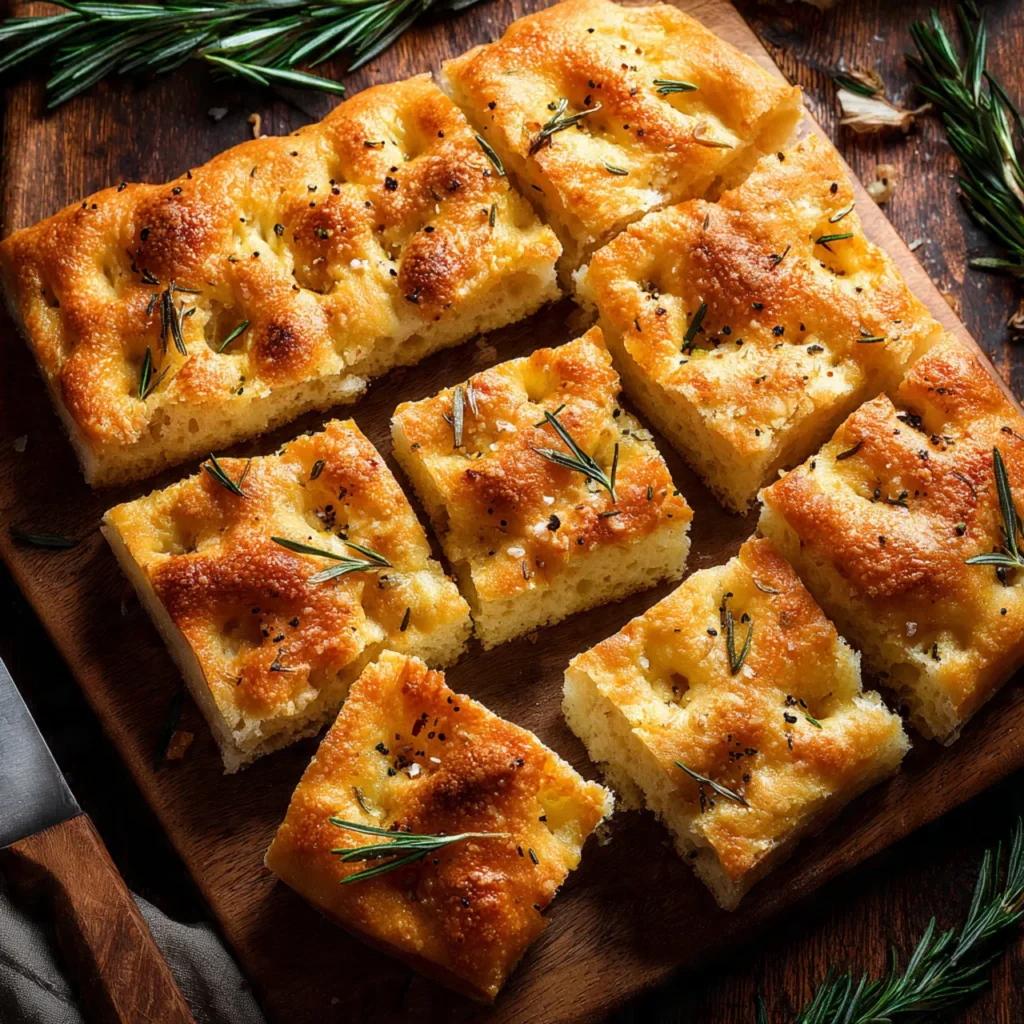
This Easy Homemade Focaccia offers a warm, fragrant union of olive oil, rosemary, and a delicately aerated crumb. The bread bakes to a golden crust that crackles lightly under the fingers, while its interior remains tender and subtly aromatic. With its simple ingredients and generous flavors, this focaccia suits everyday meals, leisurely weekend gatherings, or cold evenings that call for something comforting and freshly baked.
Servings
Servings: 8–10 servings
Times
Prep Time: 20 minutes (plus rising time)
Cook Time: 25 minutes
Total Time: 2 hours 45 minutes
Ingredient List
Main Dough
-
500 g all-purpose flour
-
370 ml lukewarm water
-
8 g fine sea salt
-
7 g instant dry yeast
-
2 tbsp extra-virgin olive oil (plus more for greasing)
Topping & Seasoning
-
2–3 tbsp extra-virgin olive oil
-
6–8 rosemary sprigs, leaves chopped or left whole
-
1 tsp flaky sea salt
-
Optional: ½ tsp cracked black pepper
-
Optional: 1 tsp roasted garlic, finely chopped
Step-by-Step Preparation
1 – Build the Aroma Base
Begin by preparing a smooth dough that will serve as the foundation of the focaccia’s texture and flavor. In a large mixing bowl, combine the flour, salt, and instant yeast. Stir briefly to distribute the ingredients evenly. Add the lukewarm water and olive oil, mixing with a wooden spoon until the dough begins to come together. Once it forms a shaggy mass, transfer it onto a lightly floured surface and knead for 8–10 minutes.
The dough should gradually transform from a sticky, uneven mixture into a supple and elastic structure. This kneading stage develops gluten, which allows the focaccia to rise uniformly and achieve its characteristic airy crumb. Lightly oil a clean bowl, place the dough inside, and turn it once so it is coated with a thin sheen of oil. Cover with a cloth and allow it to rise until doubled in volume, about 1½ hours at room temperature.
During this rise, the dough develops gentle fermentation aromas—warm, yeasty, and faintly sweet—indicating that the base structure is forming correctly.
2 – Pan Preparation & Second Rise
Once the dough has doubled, prepare a baking pan (approximately 23×33 cm). Coat the bottom generously with olive oil; this ensures crisp edges and prevents sticking. Transfer the risen dough into the pan.
With well-oiled fingertips, gently stretch and press the dough outward until it covers the surface. Avoid deflating it completely; the aim is to redistribute the internal gas pockets while maintaining their structure. Cover again and let the dough rise for 30–40 minutes. This second rise contributes to the light, airy interior and creates the ideal environment for the topping ingredients to settle into the dough without sinking too deeply.
3 – Dimple, Season & Bake
Preheat the oven to 220°C. When the dough is visibly puffy, drizzle 2–3 tablespoons of olive oil across the surface. Using your fingertips, create deep dimples evenly throughout the dough. These indentations hold the aromatic oil and herbs, ensuring each bite carries flavor.
Scatter the rosemary leaves over the dough, along with flaky sea salt. Add cracked pepper or finely chopped roasted garlic if desired.
Transfer the pan to the center of the oven and bake for 22–25 minutes, or until the focaccia turns golden brown with slight caramelization along the edges. The aroma will be warm and herbaceous, with notes of toasted flour and olive oil rising as the crust crisps.
Remove from the oven and allow it to cool for 10 minutes before slicing. This short rest helps the crumb stabilize while keeping the crust pleasantly crisp.
4 – Serve
Cut the focaccia into squares or strips and serve warm or at room temperature. It pairs naturally with soups, salads, grilled meats, or a simple dipping dish of olive oil and balsamic vinegar. The bread should exhibit a crisp underside, a lightly chewy interior, and a gentle rosemary fragrance. For gatherings, serve directly from the pan for a rustic presentation, or slice and arrange on a wooden board for a more refined, table-ready display.
Variations
Garlic-Parmesan Focaccia
Add 40 g grated Parmesan and 2 cloves finely minced garlic into the dough for a richer, savory character.
Olive & Sun-Dried Tomato Focaccia
Scatter 80 g pitted olives and 50 g chopped sun-dried tomatoes across the dough before baking.
Onion Focaccia
Spread thinly sliced caramelized onions over the dough for a sweeter, more aromatic twist.
Spicy Herb Focaccia
Add a pinch of chili flakes to the topping oil for subtle heat.
Whole-Wheat Variation
Replace 150 g of the all-purpose flour with whole-wheat flour to add earthier notes and a denser crumb.
Tips
Use Generous Olive Oil
Focaccia relies on a well-oiled surface and pan to create its signature crispness. Do not reduce the oil quantity; it directly affects crust quality and flavor.
Allow Full Rising Time
Underproofing leads to dense bread. Ensure the dough doubles fully during the first rise and appears airy during the second.
Create Deep Dimples
Shallow indentations will not hold the oil and seasoning effectively. Press confidently but gently to avoid deflating the dough.
Use Fresh Rosemary When Possible
Fresh herbs deliver brighter aromatics. If using dried rosemary, reduce the amount slightly and rub it between your fingers to release its oils.
Storage & Reheating
Store leftover focaccia in an airtight container at room temperature for up to 2 days. Reheat briefly in a hot oven to restore crispness. Avoid refrigeration, as it can toughen the crumb.


